
015: Slowness as intelligence
A day measured in meaning, not speed

Time moves differently depending on how it is held. It can rush past, a relentless river pulling everything into its current. Or it can settle like a quiet pond, still enough to reflect what is truly there. The difference between these ways of moving through life is not just a matter of speed—it is a matter of attention, intention, and intelligence.
Slowness is often mistaken for delay or weakness. Yet, there is a depth to slowness that reveals what haste obscures. It is in the patient unfolding of moments—those that allow perception, care, and clarity—that intelligence quietly grows.
This essay traces a single day lived with this deeper pace. Not to romanticize slowness, but to explore it as a deliberate way of knowing and being.
Morning
The day begins in stillness, before the demands of work or obligation press in. There is space to breathe, to observe, to arrive. No need to rush into productivity or distraction.
The soft diffusion of morning light filters through a window. Breath returns to rhythm. A kettle hums. Grounds are measured and stirred with intention. The hand moves slowly—not as an aesthetic choice but because attention has been given permission to arrive fully. Coffee is made without distraction, and in the making, time seems to widen.
A paragraph on a page holds focus. It is read once, then again. Not for clarification—but for texture, tone, a feeling that wasn’t visible the first time. The passage doesn’t demand to be rushed. Its meaning unfolds in layers.
There is a kind of intelligence here. One that does not race toward conclusions, one that values the quiet recognition of something as it truly is. It’s not about being slow for slowness’s sake. It’s about offering time to what might otherwise be skimmed past or forgotten.
“It takes time to live. Like any work of art, life needs to be thought about.”
— Albert Camus

Late morning
A walk unfolds. No music. No conversation. No multitasking. Just the sound of footsteps, the presence of wind threading through the leaves, the unnoticed sway of trees leaning into light. There is no destination. The movement is its own reason.
Thoughts drift in. Not hurried, not tightly gripped. Ideas emerge that were once buried in the backlog of urgency. A conversation from weeks ago resurfaces—not in agitation, but with gentler understanding. The mind, given space, does not stop thinking; it begins to listen.
“There is a kind of attention that is driven by demand,” writes Jenny Odell in How to Do Nothing, “and a kind that is driven by care.”
Care-based attention cannot be manufactured on command. It arrives when there is room. When the pace slows enough to let signals come through.
The intelligence here is generative. It creates room for memory, for recognition, for quiet synthesis. Sometimes the clearest ideas appear not when we strain for them, but when we stop crowding them.
“The mind that is not baffled is not employed. The impeded stream is the one that sings.”
— Wendell Berry

Afternoon
The afternoon often carries the weight of accumulated tasks—emails waiting for answers, decisions needing to be made, meetings looming. It’s easy to feel swept into a current of busyness where everything seems urgent, every notification demands immediate attention, and every choice feels like a test of speed.
But true intelligence in this space comes not from reacting to every ping, but from choosing which ones deserve response and which can wait. It means holding space for what genuinely requires immediate action, while resisting the pull to treat every demand as urgent. This discernment requires a steady awareness—a practiced ability to feel which matters need tending now and which benefit from time to breathe.
Slowness here does not equal passivity. It is an active, mindful engagement with time and priorities. It is the quiet confidence to delay a reply in favor of clarity, to postpone a decision until more information surfaces, or to let a thought settle before responding. It respects the reality that not all movement is progress, and not all speed is productivity.
This way of moving through the afternoon acknowledges urgency as real and sometimes necessary. Some moments demand quick action; emergencies cannot wait, opportunities may close, and crises require immediate care. But it also recognizes that when everything is treated as urgent, urgency itself loses meaning. The real challenge lies in cultivating the wisdom to distinguish between moments that call for rapid response and those that require patient reflection.
“Don’t just do something. Stand there.”
— Buddhist teaching
Standing there is not inaction. It is the courage to pause and see clearly. It is the willingness to be fully present before leaping into the next task. In this space, slowness becomes a strategy, a way to navigate the afternoon with grace and purpose, not haste and noise.
Dusk
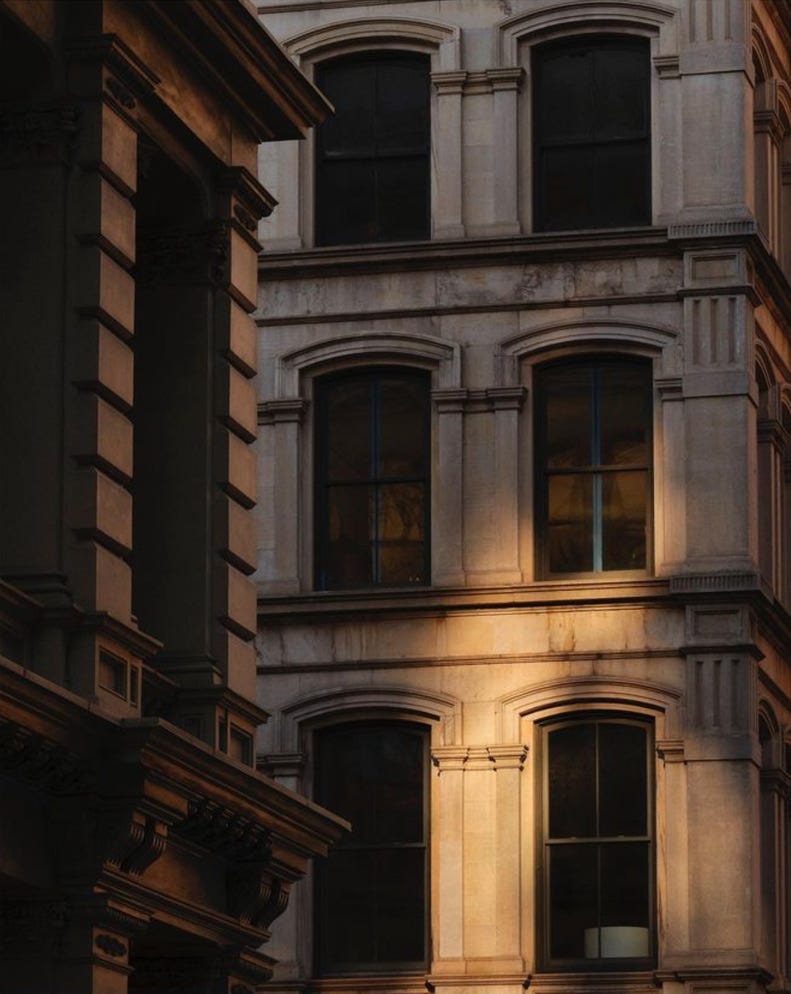
The light leans. Shadows stretch. The day enters its softest register. Walls that were washed out by the sun now glow with warmth. A spoon left in a bowl gleams with the last light of the hour. Everything looks more like itself in this slant of time.
This is the hour that resists commodification. The hour that slows the heart and returns the eye to noticing. It is neither peak nor trough, just transition. The threshold hour.
“Beauty is a kind of truth, the kind that takes its time.”
— Unknown
In this light, the world invites no reaction. It only wants to be received. And in receiving it, slowness stops being a method—it becomes a mode of perception.

Evening
Dinner is prepared without haste. A knife glides slowly. Spices are measured by hand, not scale. There is time to taste. To adjust. To listen to the sizzle of something coming alive in the pan.
The Japanese term: te-ate, means “hand to hand.” Though it refers to healing, the deeper meaning lies in the kind of presence that care requires. The hand placed gently, the gesture that restores—not by force, but through attention.
So much of what makes life feel whole has te-ate in it. The presence behind the gesture. The attention that can’t be seen, but is felt.
There are no performance reviews for this. No metrics. And yet, its impact is lasting. Slowness here is not luxury…it’s depth.
“When an enterprise grows beyond a certain point, it begins to destroy the very thing it sets out to serve.”
— Ivan Illich
Some parts of life are not meant to scale. They are meant to be held.
A life that moves differently
Slowness is often misunderstood. Branded as laziness, indecision, or lack of ambition. But the truth is more demanding. Slowness asks for courage—to remain present without the rush to resolve. To notice without the compulsion to judge. To act with intention, not impulse.
It does not deny the reality of urgency. In fact, it honors it—by ensuring urgency is not fabricated or habitual. By offering the clarity to tell the difference between what is truly critical and what is just noise.
There is a kind of knowing that can’t be rushed. A kind of relationship that can’t be accelerated. A kind of clarity that only arises when something receives full, unbroken gaze.
“We have turned our faces from the mystery, from the deep and beautiful stillness.”
— John O’Donohue
To turn back toward stillness is not to abandon the world. It’s to return to it more wholly.
This is not a lifestyle. It is a worldview. One that chooses proportion over performance. One that lets time shape us, rather than treating it as something to outsmart.
Some things are not made better by speeding up. They are made true by slowing down.
Let others optimize. Let others chase. The question worth asking is not how much faster we can go, but how much deeper we are willing to live.
A life that moves differently does not scale. It roots.
And in rooting, it remembers what it means to be whole.